
Reality has finally poked its ugly head around the corner, telling us that we really need to start making a living and stop eating into our hard earned but rapidly depleating savings. Having softened this inevitability with a month of road-tripping around various Great British beach towns, and tracking down some Maldives-grade worthy seaside spots, the now even harsher reality of London has finally hit.
Don’t get me wrong, I’m a big London fan, but now the decision to first soften the blow of an impending relocation from Singapore with four months of Provence living is making this new hard graft phase even ruder a reality.
I sit here on the first day of Ally’s return to employment, without my right hand parenting man and wondering how this solo mothering actually works. We’ve done yet more softening by way of bunking with with the grandparents until the end of the month, but it turns out granny actually has quite a busy life and this is probably the only hour of blogging time I’ll find in the next year.
So I’ve taken some time to reminisce about our wonderful petit sabbatique en France, and remind myself of all the very important (somewhat subjective) life lessons we picked up along the way.
We’ve been drinking (all the) rosé wrong
Given our penchant for the (pale) pink stuff (I think we and our friends single handedly propped up the industry from Singapore for many years), we spent a fair amount of our time in Provence “researching” the somewhat overwhelming market – hunting down the best stuff out there, working out if it really is worth spending the big bucks for the Miraval premiums of this work, and generally trying to understand how we should be buying and drinking rosé.
One of my most interesting, and simple, revelations was that we’ve been storing and serving rosé completely wrong. It turns out it should NOT be kept in the fridge because this shocks the wine and breaks down its structure – which is getting increasingly more complex as rosé becomes known as a more serious wine, and quite rightly competes with whites and reds on the dining table.
So rosé should be stored (ideally) in a wine fridge at 12 degrees and then served (always Provence-style in a PVC wine bag (!)) with iced water.
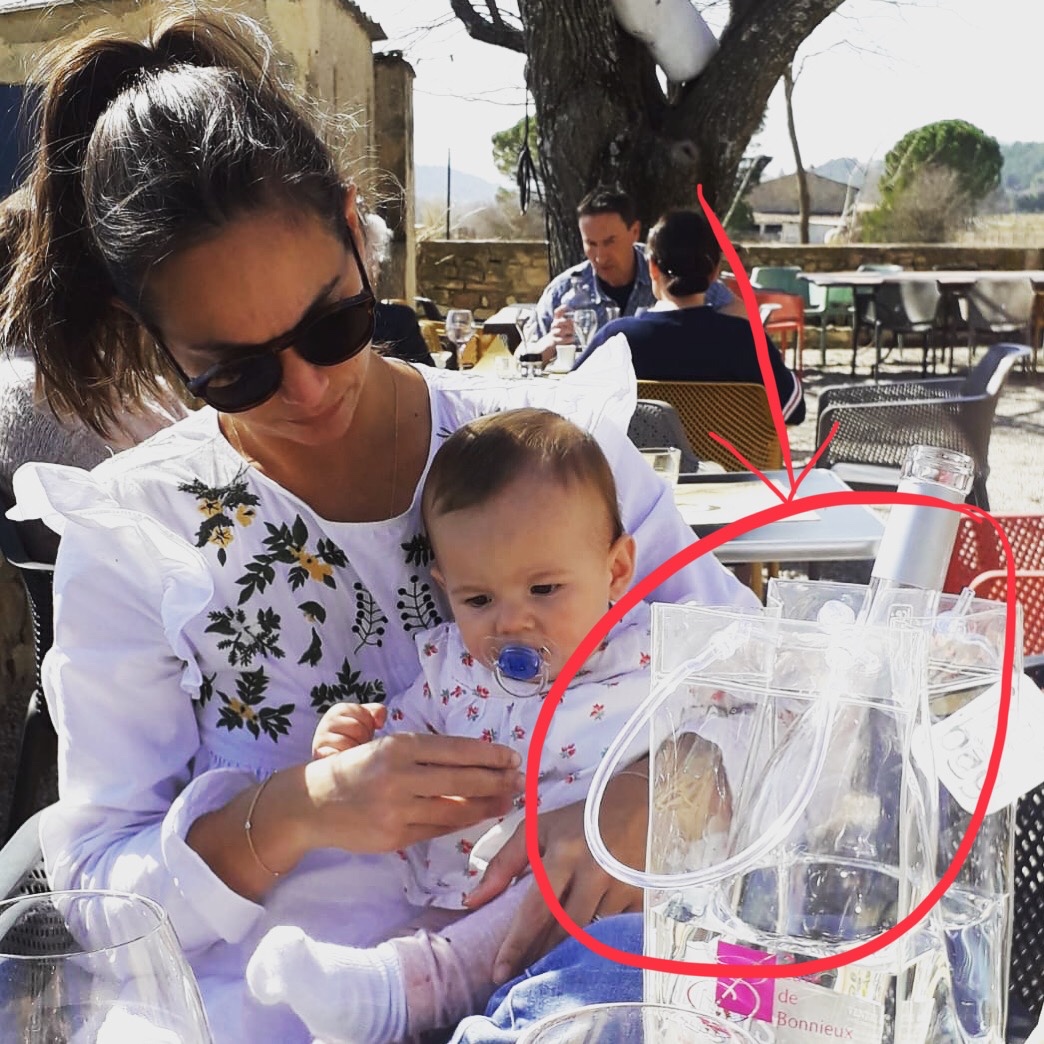
You can imagine the look we got when we asked the experts at our local Domaine de Citadelle their thoughts on putting ice in your rosé.. There are a few aperitif roses around here but the majority are pretty serious wines and built to pair with foods. Diluting it with frozen water does not go down well.
Colour doesn’t matter
Returning to the UK from France, and seeing the rosé wines on the supermarket shelves that are clearly trying to cater to the Anglophone rosé palate is interesting. Everything from Provence is the same very pale, bordering on grey, colour and from a rather generic (and in reality non-existent) appellation “Provence”. Trying some of the wines are currently being pushed by Majestic e.g. the very pale Secréte we were distinctly unimpressed (but we admit we’ve been totally spoilt). Comparing this directly against a pinker M&S Sainte Victoire region wine (known to produce some of the best out there), it was an easy choice for colour.


Having sampled such a range during our time in France it really was clear that colour doesn’t matter when it comes to quality, at least when applied to Provence rosés (i.e. the moscatos of this world should still be avoided at all costs).
Provence rosé gets its delicate colour largely from a process called maceration, when the red grape juices are kept in contact with the skins for a very short period. One winery we went to did this for about 15 minutes, but it’s generally done for anything between an hour and 24 hours. A few other parts of the process help to determine wine colour – vinification method, grape type and terroir. The Vins de Provence website has lots of interesting info on this.
While I’m sure you could argue that some of the better rosés out there happen to be lighter in colour, many of our favourites were more on the pink end of the scale – particularly the more interesting ones from the Luberon. And these were the more “robust”, to-be-eaten-with-food-wines – most notably for us Ménerbes’ delicious Domaine Ruffinatto , Domaine de la Citadelle’s Les Artémes from just down the road, and Bonnieux’s family-produced award-winning Clos du Tilleul. I suspect that most wine experts, and more so rosé experts, would agree that we shouldn’t judge our wine by the colour of the bottle.

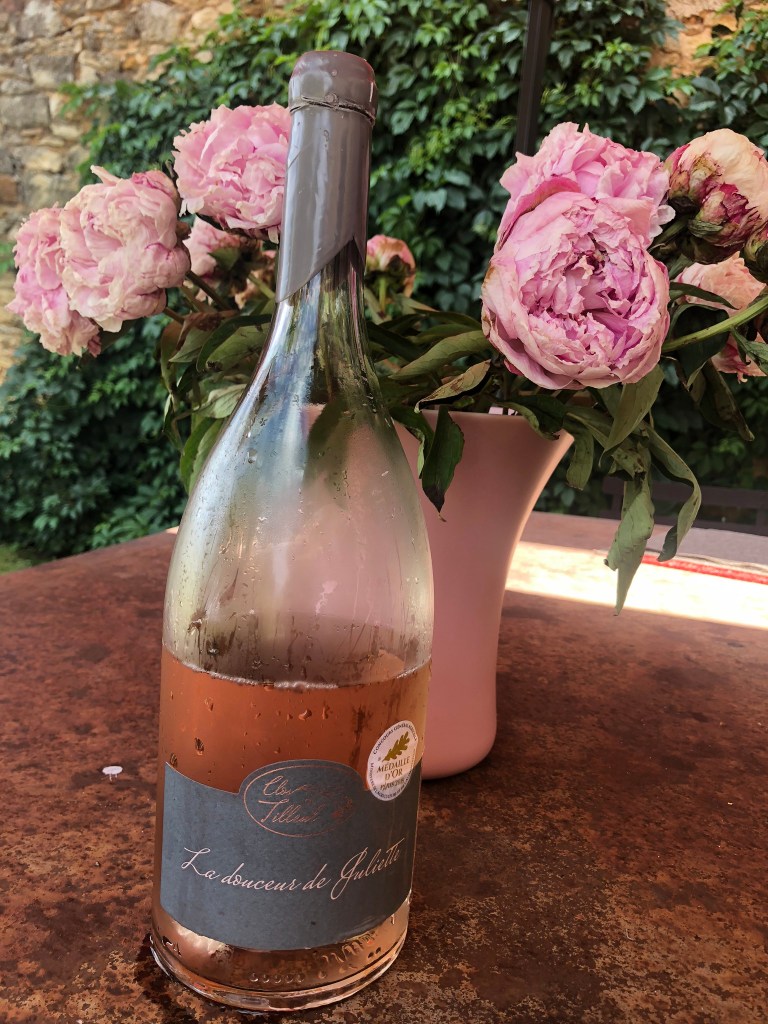
A good number of the UK supermarket wines are also from a broad and rather generic Côte de Provence appellation, with very little from the lesser-known, more specific regions e.g. Côte de Provence Sainte-Victoire, Coteaux d’Aix en Provence and of course the Luberon (not a specific rosé appellation). Sadly I’ve so far seen no Luberon rosés here – and even sadder, pretty much all of our favourites don’t even export outside of France, such is the domestic demand and also such is the volume of production.
French music is the best

Other than a cold glass of rosé, there’s nothing better for sending me back to our long days at the farmhouse than the uber cool French music we would blare out at an attempt to be immersive in the whole experience, and maybe to try and kick start our French language skills.
Some of our top day-time, pool-lounging, rosé-drinking and road-tripping tunes are:
Clara Luciani – song of the trip Grenade
Les Enfoirés – On Trance (while singing it with the babysitter next door we realised it’s probably the French version of Mr Blobby, but we love it)
Angèle – Balance ton quoi (in support of the #BalanceTonPorc movement – France’s version of #MeToo)
Ben Mazué – Nous deux contra le reste du monde
Joe Dassin – Les Champs-Élysées (2am serenading probably not appreciated by the locals)
Pink Martini – Sympathique (Je ne veux pas travailler) (moto of the trip)
Once you go French, you can’t go back. Get listening.
Childcare is tough
But I’d recommend any initiative that allows dads to realise just how much time kids take up of the day (like, 99%), and actually how hard it is to entertain them, cook for them, clean up after them, wash and hang their clothes ALL DAY LONG. There’s definitely less pressure on me to get back to work, knowing exactly how much work there is at home, but on the other hand he realises I may lose my actual mind if I don’t escape at some point soon.

Take the break
We were very fortunate to be able to have our work-free time in Provence, and spend such a rewarding (sometimes) and special time together as a family, before school and work get in the way of such dreams. We’d also hit a natural cross road, leaving our respective jobs and making the decision to leave Singapore, and I don’t think we would have been able to work out which way next without the time we had.
While it would have been incredible to discover a way of making loads of cash while living in one of the most beautiful parts of the world, it was slightly unrealistic, and if anything it’s given us a big carrot to be as successful as we can and get ourselves back to the land of wine, lavender and more wine.

We also realised just how much we need a social life, bars and restaurants to spend our hard earned money, and more importantly a means to earn said money. Provence is not cheap – to do it well you really don’t want to be on a budget.


 By way of Provence
Leela just wanted to say how well you write and how much I have enjoyed your journey. When we meet there never seems to be time to talk about any of your time out so it has been lovely reading this. You have two lovely daughters and I look forward to seeing them grow up. Hopefully not too quickly. Liz Xx
LikeLike